Can you cook with extra virgin olive oil?
You can, and cooks around the Mediterranean have for centuries. The idea that extra virgin olive oil is only for drizzling comes mostly from a narrow focus on smoke point. For everyday cooking at home, a good extra virgin oil is a safe, stable and delicious choice.
Cooking does soften an oil's flavor and reduce some of its delicate compounds, which is why many cooks use an everyday extra virgin oil in the pan and save a special bottle for the table. That is a choice about flavor and budget, not safety.
The truth about olive oil smoke point
Smoke point is the temperature at which an oil starts to visibly smoke. For extra virgin olive oil it is commonly cited at roughly 350 to 410°F, and it varies with freshness and quality. Fresher oils with low acidity tend to sit higher in that range.
Smoke point is only part of the story. How well an oil resists breaking down under heat matters as much. Extra virgin olive oil is mostly monounsaturated fat, which is relatively stable, and its natural antioxidants help protect it while it cooks. Most home cooking, from sauteing to roasting, happens comfortably within its range.
Sauteing, roasting and grilling
These are olive oil's home ground.
- Sauteing: medium to medium-high heat, enough oil to coat the pan. Add food once the oil shimmers, before it smokes.
- Roasting: toss vegetables generously in oil and roast at around 400 to 425°F. The oil helps browning and carries flavor.
- Grilling: brush oil on the food rather than the grates, and season right after.
- Braising and slow cooking: start with oil for the aromatics, then finish with a fresh drizzle at the table.
Frying with olive oil
Frying with olive oil is a long tradition in Spain, Italy and Greece. Shallow and deep frying typically happen around 350 to 375°F, which a good extra virgin oil handles well. Many cooks find it gives a crisp, golden crust with a little more flavor.
- Use a thermometer and keep the oil below smoking.
- Do not overcrowd the pan, which drops the temperature and makes food greasy.
- If you choose a milder or more affordable oil for deep frying, that is a reasonable trade-off. Save your best bottles for finishing.
Finishing oil: the one-second upgrade
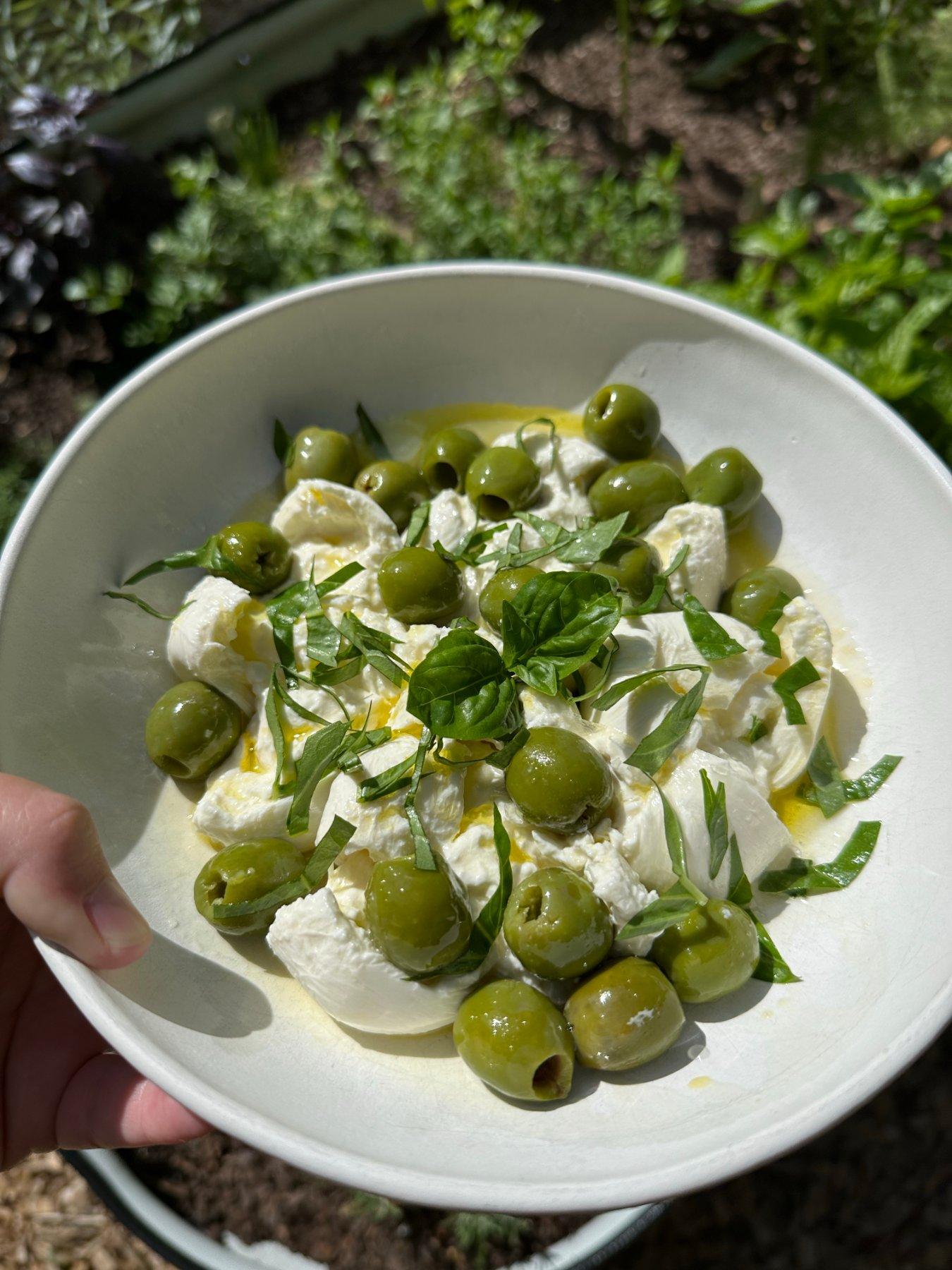
A finishing oil is simply a good, fresh oil used raw, added just before serving. Heat softens an oil's flavor, so a drizzle at the end brings back the fruit, bitterness and pepper you paid for.
Try it over soup, beans, grilled fish, roasted vegetables, pasta, ripe tomatoes, eggs or even vanilla ice cream. A robust oil gives more drama. A delicate oil is better on fish and mild dishes.
Finishing is also where the difference between oils is easiest to taste. If you are deciding whether a better bottle is worth it, try it raw on warm white beans or a slice of good bread before anything else.
Baking with olive oil
Olive oil makes cakes, quick breads and muffins moist and tender, and it keeps them that way for days. It works best in recipes that already use melted butter or another oil.
When swapping for butter, a commonly used rule is about three parts olive oil for every four parts butter, so roughly three quarters of a cup of oil for one cup of butter. Results vary by recipe, and swaps work less well where solid butter is creamed for structure, such as some cookies and pastry. A delicate oil keeps the flavor gentle. A robust one makes the oil part of the point, which is the charm of a classic olive oil cake.
Everyday uses worth knowing
- Salad dressing: a common starting point is three parts oil to one part vinegar or citrus, adjusted to taste.
- Bread dipping: good oil and a pinch of flaky salt are all you need.
- Pasta: garlic gently warmed in oil, chili flakes, pasta water and parsley make one of the simplest sauces there is.
- Breakfast: fry eggs in olive oil, drizzle it on toast or bake it into granola.
Olive oil even belongs in dessert. A drizzle over chocolate, citrus or ice cream with a pinch of salt is a small revelation the first time you try it.
Which olive oil to use for what
You do not need a shelf of bottles. Most kitchens do well with two: a reliable, fairly priced extra virgin oil for everyday cooking, and a fresher, more characterful one for finishing and dipping. If you bake often, a delicate oil earns a place as a third.
Questions people ask
Is it safe to cook with extra virgin olive oil?
Yes. Extra virgin olive oil is widely used for cooking and holds up well to typical home temperatures. It is mostly monounsaturated fat, which is relatively stable under heat, and its natural antioxidants help protect it. Keep the pan below the point where the oil smokes, as you would with any oil, and it is a sound choice for sauteing, roasting and frying.
What is the smoke point of olive oil?
Extra virgin olive oil is commonly cited at roughly 350 to 410°F, though the exact figure varies with freshness, acidity and quality. Refined olive oils tend to have a higher smoke point. Smoke point alone does not tell you how well an oil handles heat; resistance to breaking down matters too, and extra virgin performs well on that measure.
Can you deep fry with olive oil?
You can. Deep frying usually happens around 350 to 375°F, a range olive oil handles well, and frying in olive oil is traditional across the Mediterranean. Use a thermometer, avoid overcrowding the pot and do not let the oil smoke. Because frying takes a lot of oil, many cooks choose a milder, more affordable extra virgin and keep their best bottle for finishing.
Can I substitute olive oil for butter in baking?
In many recipes, yes. A commonly used rule is about three parts olive oil for four parts butter, or roughly three quarters of a cup of oil per cup of butter. It works best in cakes, muffins and quick breads that use melted butter. Recipes that rely on creaming solid butter, like some cookies and flaky pastry, may not turn out the same.
What is a finishing olive oil?
A finishing olive oil is a high-quality, fresh oil drizzled over food just before serving rather than cooked. Since heat softens flavor, adding oil at the end brings out its fruitiness, bitterness and pepper. Any good extra virgin oil can be a finishing oil. Many people keep a more robust or special bottle just for this and use an everyday oil for cooking.
Updated 2026-11-16.